

Blog
BLE-Tracking: The Future of Localization Technology

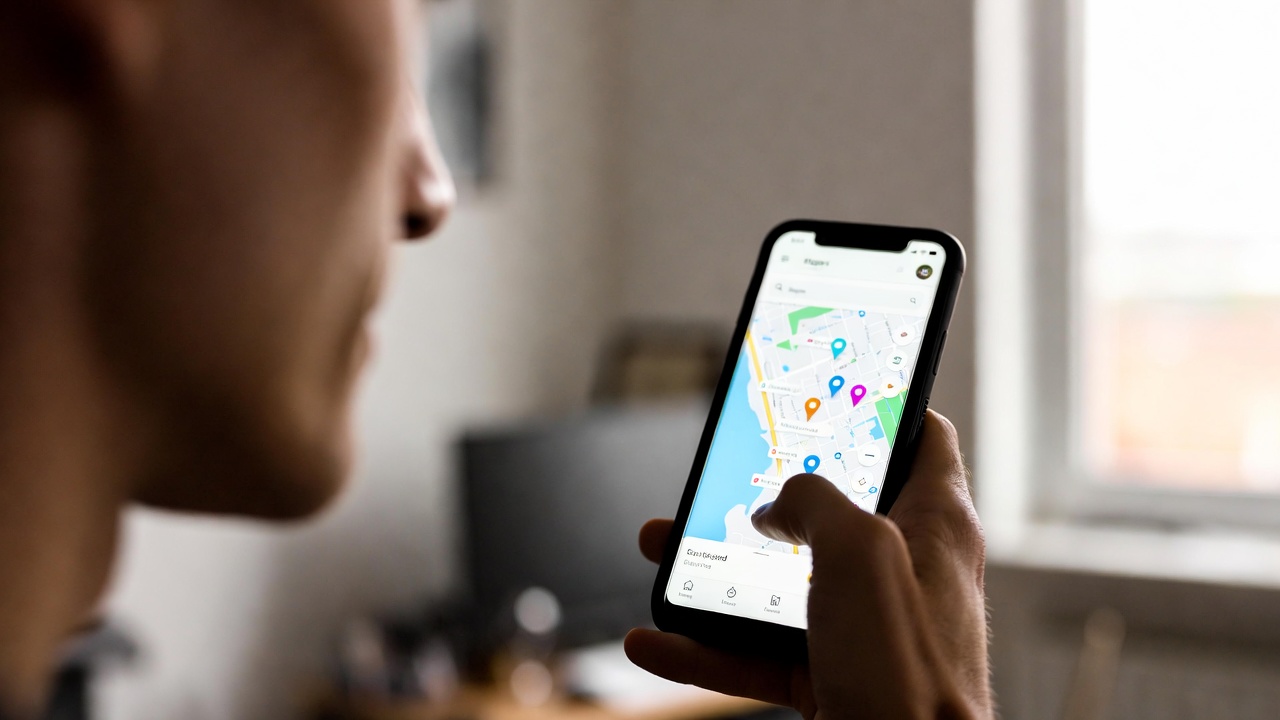
BLE-Tracking & GPS-Tracker – Modern locating technology explained in simple terms
In an increasingly connected world, Bluetooth Low Energy (BLE) has established itself as a key technology for locating objects – from lost keys to valuable goods in industrial environments. Together with GPS trackers, BLE forms the technological basis of modern tracking devices.
BLE-Tracking uses wireless communication to provide location data with minimal energy consumption, making it ideal for battery-powered trackers. By the end of 2025, this technology is more widespread than ever and drives both consumer products like Apple’s AirTag and professional tracking solutions in supply chain management.
This article on mapaho.com provides a comprehensive overview of:
- how BLE-Tracking and GPS trackers work
- common locating devices
- industrial and private application areas
- data privacy and security aspects
- open-source projects
- as well as future developments
What is Bluetooth Low Energy (BLE) and why is it so important for locating systems?
Bluetooth Low Energy (BLE) is a wireless communication protocol introduced in 2010 with Bluetooth 4.0. Unlike classic Bluetooth – for headphones, for example – BLE is optimized for short data transmissions with extremely low power consumption.
As a result, BLE trackers can operate for months or even years on a single battery – a decisive advantage over traditional GPS trackers. BLE operates in the 2.4 GHz ISM band and uses frequency hopping to minimize interference. With Bluetooth 5, data rates of up to 2 Mbit/s are possible.
Positioning is achieved via so-called beacons or tags, which regularly emit signals with unique identifiers. These signals are received by smartphones or gateways and used for location determination.
How does BLE-Tracking work technically?
BLE-Tracking is based on communication between peripheral devices (trackers) and central devices (smartphones, hubs or gateways). The trackers transmit at fixed intervals (typically 100–500 ms) advertising packets that contain, among other things, UUIDs and manufacturer data.
Location determination is not via GPS, but via proximity measurements:
- RSSI (signal strength) for distance estimation
- Trilateration over multiple receivers
- Fingerprinting for position mapping
With Bluetooth 5.1 came additional Angle of Arrival (AoA) and Angle of Departure (AoD) introductions. In combination with runtime measurements, this enables location accuracy in the centimeter range, particularly indoors where GPS fails.
In community-based networks, such as Apple’s “Find My”, nearby smartphones anonymously report the position of a BLE tracker to its owner. This principle makes BLE trackers particularly effective and energy-saving.
Security & Data Privacy in BLE trackers
BLE locating systems rely on various security mechanisms:
- LE Secure Connections
- Encryption using elliptic-curve Diffie-Hellman
- MAC address randomization
However, BLE advertising signals are often unencrypted, which poses potential risks. Modern trackers – such as those offered on mapaho.com – therefore use rotating identifiers and additional protection mechanisms against unauthorized tracking.
Popular BLE-Tracking Devices (as of 2026)
We have a variety of BLE trackers in our range
-
BLE Button – The Classic
Original price was: 149,00 €.119,00 €Current price is: 119,00 €. inc. VAT -
BLE Card – The Waterproof Battery Wonder
Original price was: 189,00 €.159,00 €Current price is: 159,00 €. inc. VAT -
BLE Cube – The 3-Year Antenna
Original price was: 189,00 €.159,00 €Current price is: 159,00 €. inc. VAT -
BLE cylinder – The professional for every hole
Original price was: 199,00 €.159,00 €Current price is: 159,00 €. inc. VAT


Applications of BLE-Tracking & GPS locating
🔧 Industry & Logistics
- Asset tracking of pallets, containers & tools
- Warehouse and inventory management
- Low operating costs through long battery life
🏥 Healthcare
- Tracking of medical devices
- Theft protection & availability management
🏪 Retail & Production
- Beacons for customer guidance
- Tool & machine tracking
🏠 Private & Everyday
- Key & luggage tracker
- Theft protection for bicycles
- Pet tracker
- Smart city applications
Open-Source Projects in BLE-Tracking (Macless-Haystack)
A particularly innovative area is Open-Source BLE-Tracking. Projects like Macless-Haystack enable you to build your own BLE trackers that use Apple’s Find My network – without Apple hardware.
Using affordable microcontrollers (ESP32, nRF52), you can create custom trackers that emit rotating keys and are detected by iPhones. Location data is transmitted encrypted and analyzed on your own servers.
These projects offer maximum control but require technical know-how and responsible handling.
Detection & Protection against Undesired Tracking
To protect against misuse, several solutions exist:
- System alerts on iOS & Android
- Industry standard DULT (Apple & Google)
- Open-Source scanners like MetaRadar or BLE Radar
Additionally, it is recommended to:
- Activate Bluetooth only when needed
- Keep firmware up to date
- Report unknown trackers
Future Trends: BLE-Tracking & GPS Locating
In the coming years, BLE-Tracking will continue to evolve:
- Combination of BLE, GPS & UWB
- AI-powered analysis of location data
- Extremely power-saving trackers
- Enhanced encryption
- Stronger open-source ecosystems
Conclusion: Modern locating solutions at mapaho.com
BLE-Tracking and GPS trackers have sustainably transformed object and person tracking. They offer high flexibility, low operating costs, and diverse use cases – from everyday objects to industrial assets.
At mapaho.com you will find modern locating devices that are based on current technologies and combine security, data privacy, and reliability.
👉 Discover GPS trackers & Bluetooth trackers at mapaho.com and keep an overview of what matters to you at all times.


